Solidarity at Scale: Converging Movements for System Change
People from all over are gathering in Denver from October 15th to 18th to continue building the post-capitalist world and forging connections between our resistance movements and alternative institutions, through strategy sessions, workshops, plenaries, and open spaces. The Resist & Build Summit is a space to meet each other in person and build our relationships.
The Critical Moment
In this continuing confrontation with our shared interlocking crises—environmental degradation, deepening inequality, resource extraction from the Global South, fascism, genocide, and U.S.-led corporate imperialism—transformation is more urgent than ever. The historic dominance of the two-party capitalist system just emphasizes the need to strengthen our independent movements for systemic change.
This gathering is a vital opportunity to deepen our networks, sharpen our strategies, and amplify our collective power to build the post-capitalist world. Resist & Build is the people’s network to bridge the gaps between our resistance movements and initiatives to build a transformed system, recognizing that resistance without a clear vision risks becoming mere reform, and building alternatives without roots in our resistance risks leading to more exclusion and co-optation.
The Summit
World Café
Setting: modeling a café, we’ll split into small groups, about four to five, at each table to begin the conversations.
Introductions: host begins with a warm introduction, setting the context, putting participants at ease.
Small-Group Rounds: conversations in small groups; by the end of each, each group member moves to a new table.
Questions: each round is prefaced with a question about our purpose at the summit, to guide our conversations.
Harvest: once the small group rounds are up, individuals share insights from their conversations with the whole group.
Concurrent Workshops
focused group discussions where we sharpen our analysis into a clear collective strategic orientation
Open Spaces
for much of this summit, we will be in self-organized gatherings to build relationships and center our purposes
Events
See here for confirmed activities.
Concurrent Workshops, Open Spaces, and Plenaries: sharing in a transformative culture of care and connection
- October 15th Location: Colorado People’s Center
- October 16th-18th Location: Tivoli Turnhalle
Summit Schedule At-A-Glance
Thursday, October 15
R&B Kick-off Opening Plenary
Friday, October 16
Concurrent Workshops and World Café
Saturday, October 17
Concurrent Workshops, World Café, and Tours
Sunday, October 18
Next Steps and Closing
Organizers
The national Summit Planning Circle includes representatives from the US Solidarity Economy Network, Build & Fight, Art.coop, People’s Network for Land and Liberation, Next System Studies, and The Democracy Collaborative.
Sponsors
The Democracy Collaborative (TDC)
US Solidarity Economy Network (USSEN)
People’s Network for Land and Liberation (PNLL)
Next System Studies (NSS)
Venues
R&B Kick-off at the Colorado People’s Center, 730 21st St. Denver, Colorado
The kick-off Opening Plenary for the R&B Denver 2026 Summit will take place at the Colorado People’s Center, a volunteer-run shared resource space where people can gather, organize, learn from one another, and build relationships. The Colorado People’s Center is located at 730 21st St. in Denver. This venue is located on the land of the hinono’eino’ biito’owu’ (Arapaho), Núu-agha-tʉvʉ-pʉ̱ (Ute), and the Očhéthi Šakówiŋ and Tsétsėhéstȧhese/Tsitsistas/Só’taeo’o (Cheyenne) Nations.
Getting there: The Colorado People’s Center is about a 30-minute walk from the main venue and a 10-minute walk from the 18th St / Stout Station stop.
Main Venue: Tivoli Turnhalle, 900 Auraria Pkwy, Denver, Colorado
Much of the Summit will take place in the Tivoli Turnhalle at the Auraria Campus on the second floor. The Tivoli Student Union is at the Auraria Campus in downtown Denver, located on the traditional territories and ancestral homelands of the Cheyenne and Arapahoe Nations. The Auraria campus is home to three institutions: the University of Colorado Denver (CU Denver), Metropolitan State University of Denver (MSU Denver), and the Community College of Denver (CCD).
Getting there: Public transit options are available for those nearby and can be found here.
Parking: There are lots of parking garage options and details about parking on the online map here.
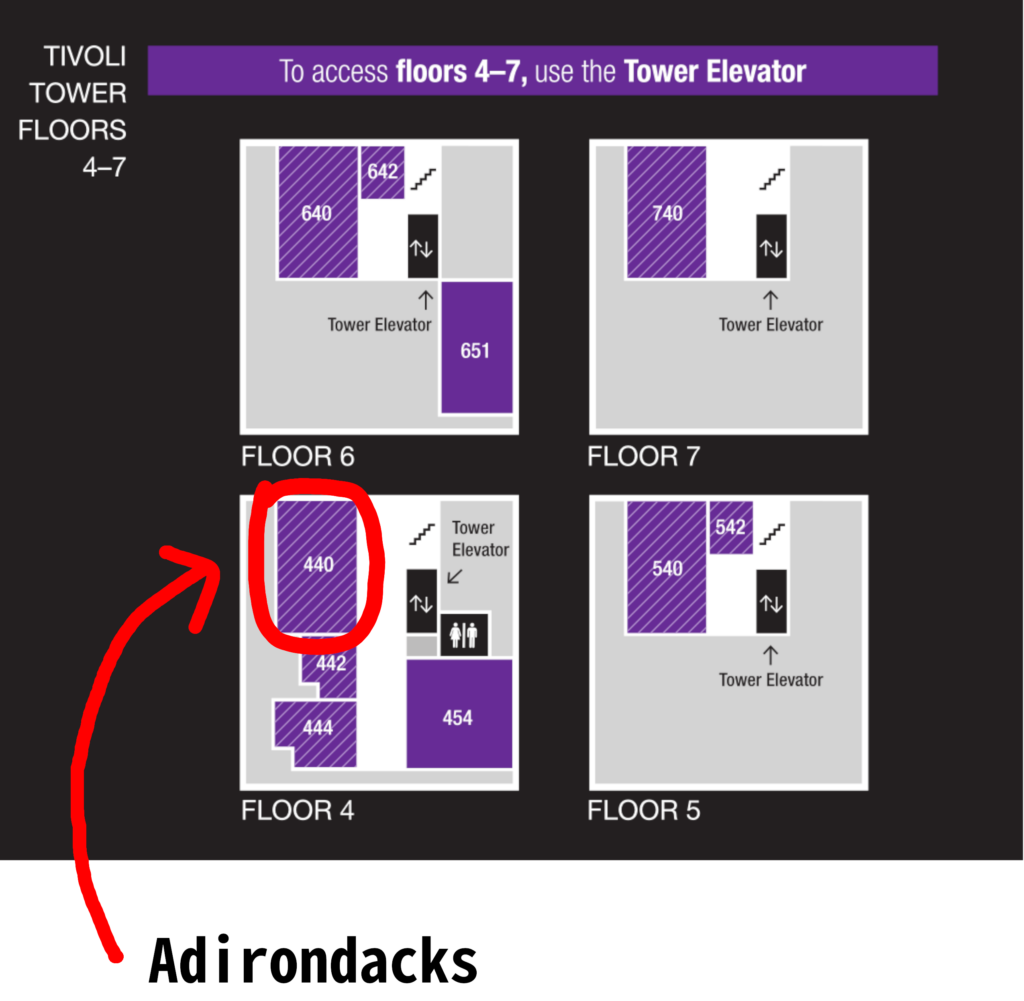
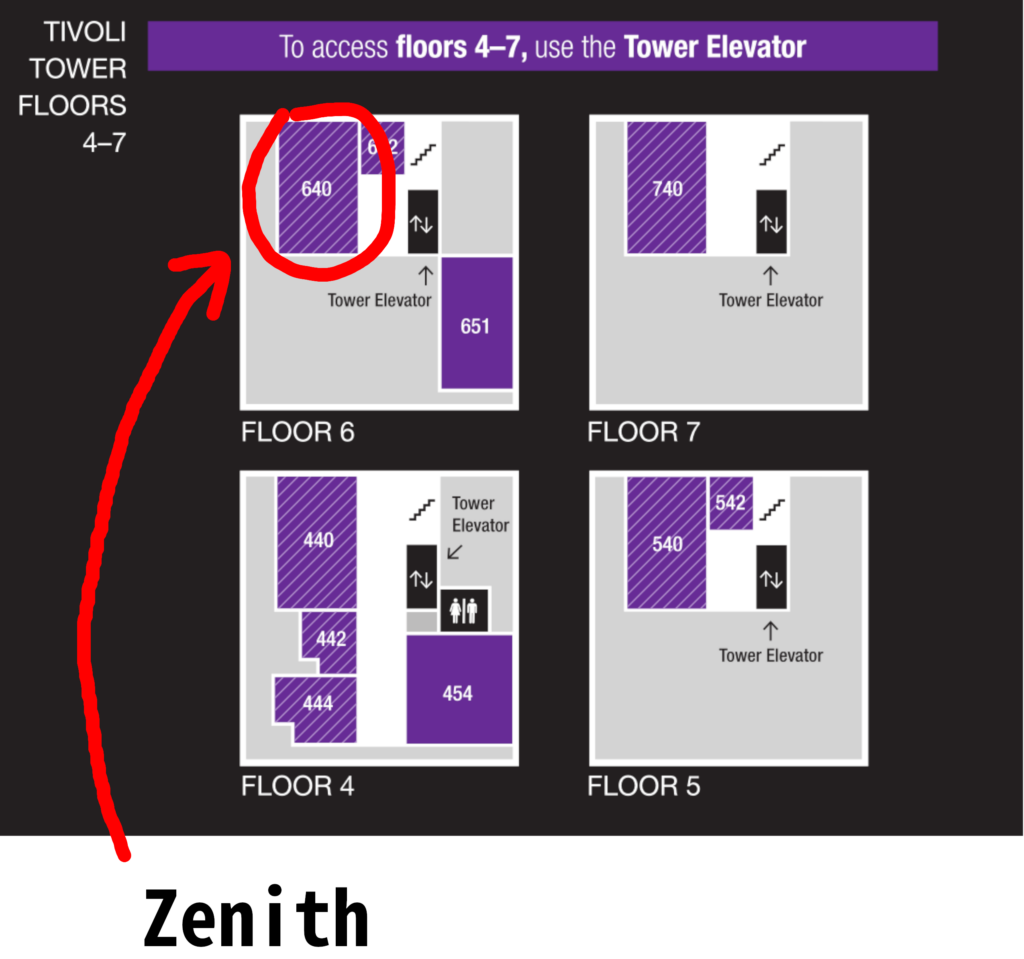
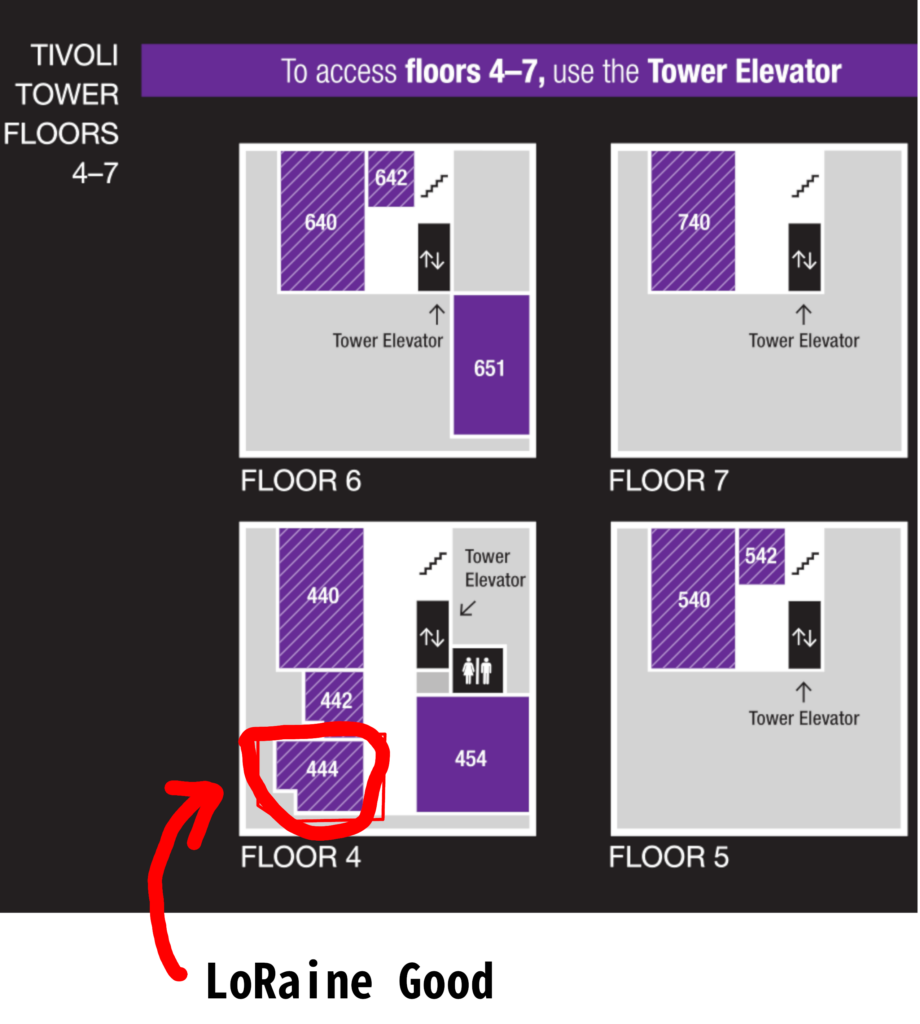
Concurrent Workshops will be held in one of several locations at the Tivoli Student Union building: Adirondacks (No. 440), Zenith (No. 640), LoRaine Good (No. 444), the Baerresen Ballroom (No. 320A-C), and the Classrooms. See the map of the Tivoli Student Union here.
See some annotated visual aids using the campus map here.
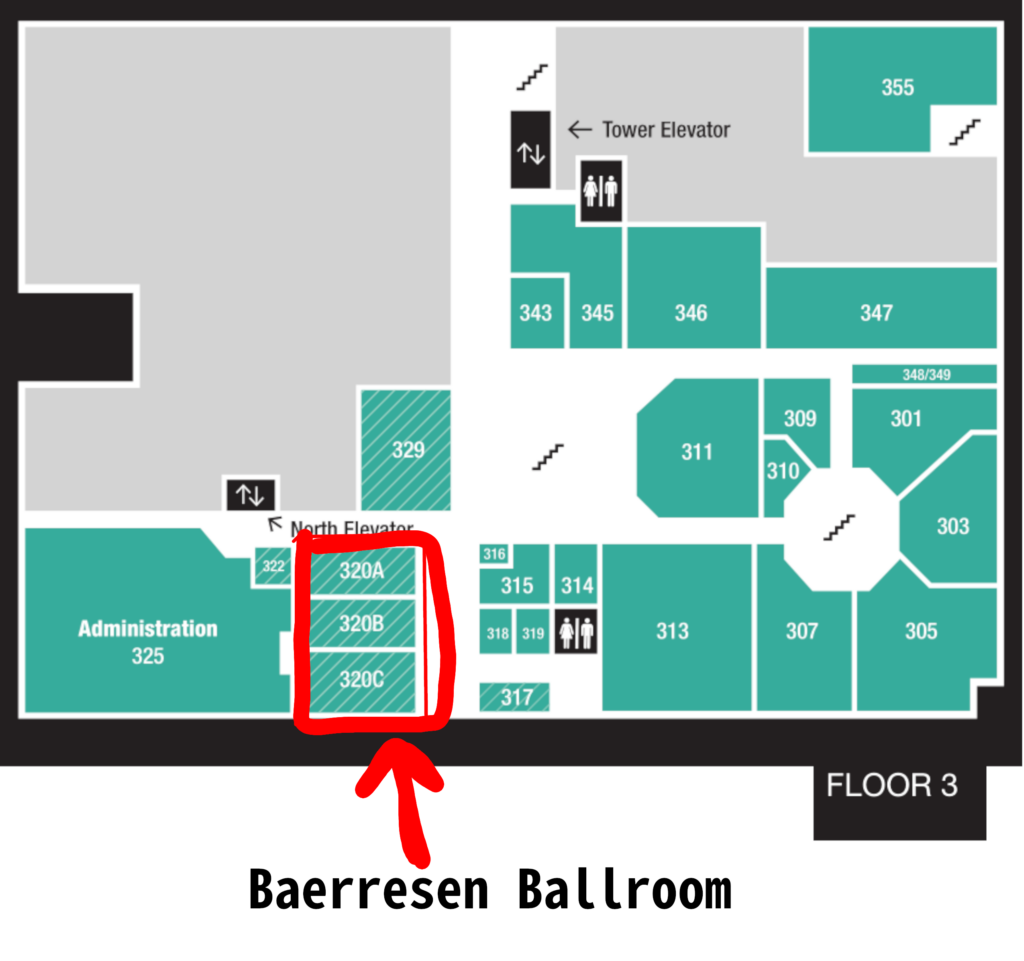
Health and Accessibility
The Colorado People’s Center has an attached single occupancy restroom and a childcare room. If you have sensory or other accessibility concerns, please contact the Colorado People’s Center ahead of time to check for any particular accommodations you might need. The Auraria Campus building is multi-level with elevators. There are lactation rooms and all-gender restrooms available. The online map also shows accessible entrances highlighted in teal.
COVID Safety Guidelines:
- masks indoors strongly encouraged
- mask while traveling required
- vaccinations expected; please do not attend if you are unvaccinated
Accommodations
There will be a discount code provided for those who wish to book their stays at the Sonesta Denver Downtown hotel, once they have completed registration for the summit. The Sonesta is located at 1450 Glenarm Place and can be reached at (303)-573-1450 for any questions. There are other options available in the downtown area but participants must make their own arrangements.
Solidarity Housing
Participants are encouraged to explore solidarity housing with trusted comrades, friends, or community hosts in Denver as a way to share resources and build connections. In the interest of safety, we cannot facilitate direct connections for housing.
Strategic Objectives
Movement Priorities and Goals
In the current context, our priorities are to:
- Strengthen networks and trust across the solidarity economy and systems change movements,
- Enrich and expand our movements, making them irresistible by fostering broad alignment around systemic change,
- Build alliances that overcome fragmentation together on common ground to scale up transformative change,
- Deepen our vision and liberation strategies from the interlocking systems of oppression, extraction, and domination, by cultivating shared strategies to address capitalist colonialism, ecological harm, and inequality, for systemic transformation,
- Respect and draw from BIPOC traditions to fight for freedom, create community-driven solutions, and reconnect with the land and our nonhuman kin,
- Foster joyful, regenerative cultures that embody justice, interdependence, and ecological restoration, emphasizing care, mutual aid, and collective healing, and
- Draw insights from feminism, disability justice, and solidarity frameworks for ongoing individual & collective well-being
Collaborative Planning Approach
The joint effort between the registration circle and the national Backbone Circle focuses on key areas:
- venue selection and logistics
- local outreach and attendee engagement
- program development
- volunteer and vendor coordination
Detailed Summit Schedule
Workshops, Open Spaces, and Events
Thursday
8:00am-10:00am — Breakfast on your own
10am-6:30pm — Travel Check-ins, Registration, and Dinner on Your Own
Throughout the day folks will be arriving, settling in, and communing together. Dinner can be on your own or with small groups autonomously organized, as travelers settle and check in to lodging before the kick-off plenary at 6:30pm.
6:30pm-9pm — R&B Summit Kick-off at the Colorado People’s Center
Location: Colorado People’s Center, 730 21st St Denver, CO 80205
Resist & Build Summit’s opening meet to ground ourselves in Denver’s vibrant ecosystem of resistance and organizing and introduce ourselves, as we kick-off a weekend of shared strategy and solidarity to connect, learn, and continue the struggle.
Friday
8:30am-9:30am — Registration and Breakfast on Your Own
9:30am-10:45am — Welcome and Panel
Location: the Tivoli Turnhalle (Room 250, second floor) at the Auraria Campus, 900 Auraria Pkwy, Denver
1045am-11:00am — Break
11:00am-12:00pm — World Café at the Turnhalle
Location: the Tivoli Turnhalle (Room 250, second floor) at the Auraria Campus, 900 Auraria Parkway, Denver
12:00pm-2:00pm — Lunch
2:30pm-3:30pm Concurrent Workshops at the Tivoli Turnhalle
- Co-op 101: Building an Economy That Works for All
Facilitated by Joel Newton, Center for Community Wealth
Location: Adirondacks
Do you want greater control over your job or housing? Cooperatives offer a democratically run alternative where businesses are owned and operated by the people who rely on them most. This introductory session breaks down the core co-op values and explains models like worker and housing co-ops. We’ll highlight inspiring Denver co-ops already making an impact in our community and share together to brainstorm cooperative ideas for your own neighborhood. - Owning the Means of Production – Why and How to Buy Your Workplace
Facilitated by Hal Benninger and Michaela Holmes, Center for Community Wealth
Location: Adirondacks
Most workers want more say in their workplace and a bigger share of the rewards, yet few realize that buying the business they work at is a real, viable path to gaining control of that work. Turning an established business into an employee-owned company is called an employee ownership conversion. Tailored specifically for Colorado workers, this workshop will demystify what worker ownership is and how to get there. We will walk you through the process of buying your workplace, help you spot the signs that your company might be a good candidate, and share practical strategies to start organizing with your colleagues. - Crash Course on Getting Off of Big Tech and the Copyleft Movement
Facilitated by Rachel E. S. Lösche and elle Rhumsaa, USFWC Tech Peer Network
Location: Zenith
This “Crash Course” on Big Tech and the Copyleft Movement will be a seminar-style workshop for activists interested in getting off of Big Tech and curious to understand more about the complex, political situation we are in with respect to the technologies so many of us use. The goal is to create a welcoming, engaging space where interested activists can get a “crash course” on the fundamentals of digital rights, digital integrity, copyleft, and the power of privacy. In this crash course, participants will get an intelligible but comprehensive foundation of key concepts like the copyleft movement, “strong copyleft” vs. “permissive” licenses, the reasons why a little step can make a big change, and how to make those steps without undue negative consequences for organizing work. By the end, participants will be able to speak to: What is Enshittification? How does Big Tech imprison us with predatory IP? and How does copyleft give us a revolutionary tool to transform our world and reclaim ownership of public utilities and tools? There will be a short demonstration of an example transition from a common Big Tech tool to its free open source software (FOSS) alternative, and participants will leave with a zine of resources and follow-up guides, showing how big this movement is and how strong we really are, to give them a place to go and continue the work on their own schedules. - Political Art for Radical Leftists
Facilitated by Kat, Mario, Erik, Sid, Honeyb, et al., Dystopian Times
Location: LoRaine Good
In this workshop, members of Dystopian Times will present on the importance of art and community-building in leftist/organizing work. Through reflections on creating our own leftist, socialist publication while centering Art, Radical Politics, and People of Color, participants will be able to glimpse into the transformative power of political art and learn practical skills for organization and co-op building. - What We Believe: Community Discussion of USSEN Principles for Building a Solidarity Economy in the US
Facilitated by Matthew Slaats, VASEN and USSEN Board
Location: Classroom 1
The US Solidarity Economy Network’s What We Believe statement offers a bold articulation of shared values, principles, and commitments guiding the growing solidarity economy movement across the United States. Yet powerful documents are only as alive as the conversations they spark. This session invites participants to move beyond just reading the statement and into active, generative dialogue about what these principles mean in practice, where tensions exist, and how this framework can sharpen our collective work. This session will briefly present the core tenets of the What We Believe statement — including commitments to non-reformist reforms, dual power, specific values — before opening the floor for structured community discussion.
Participants will be invited to reflect on questions such as: Where does this framework resonate most deeply with your work? Where do you see gaps or productive tensions? How can these shared beliefs translate into stronger movement alignment and solidarity across sectors? As the solidarity economy movement grows, so does the need for honest internal conversation. Grounding our organizing in explicit shared values while remaining open to critique and evolution is essential for building durable, inclusive power. This session creates space for longtime movement leaders, emerging organizers, cooperative members, and curious newcomers alike to contribute their voices.
3:30pm-4:00pm — Break
4:00pm-5:30pm Concurrent Workshops at the Tivoli Turnhalle
- Introduction to Community Owned Real Estate
Facilitated by David Ferris and Hal Benninger, Center for Community Wealth
Location: Baerresen Ballroom 1
What would it take for communities to own the land and buildings that shape their futures? This 90-minute workshop offers a practical introduction to Community-Owned Real Estate (CORE)—a strategy for building community wealth, preventing displacement, and shifting power to those historically excluded from development decisions. Participants will explore: What community ownership means and why it matters; The tensions inherent in CORE—affordability vs. scale, resilience vs. return, and more; The practices that constitute CORE, from binding governance to permanent stewardship; A comparative look at models including Community Land Trusts, co-ops, Real Estate Investment Clubs, and Community Stewardship Trusts; and real-world ecosystem examples from Atlanta and Denver. The workshop closes with an exercise applying CORE to a real property, giving participants a concrete sense of how community ownership can work—and what it would take to make it real in their own communities. - A Field Survey of Participatory Budgeting in the US
Facilitated by Ouree Lee, Participatory Budgeting Project
Location: LoRaine Good
This workshop will provide an overview of Participatory Budgeting (PB) impacts and shortfalls for the past 17 years since its first process in Chicago in 2009. How much money has been allocated to PB? What trends have we seen? What are the wins and losses? What types of PB exist? What might the future hold for PB? There will be a presentation of data visualizations and case studies, as well as a Question & Answer activity so the facilitator can gain greater understanding of what folks are interested in learning and knowing about PB. - Community Wealth Building & Black Communities
Facilitated by Stephanie McHenry, Kali Akuno, and Erel Onojobi, The Democracy Collaborative
Location: Classroom 1
This session will help participants understand community wealth building particularly for Black communities, with examples and analyses from members of The Democracy Collaborative.
5:30pm-6:30pm — Dinner on Your Own
6:30pm-8:00pm Free Time
Saturday
9:00am-12:30pm — Tours
Detailed information about optional tours coming soon. Stay tuned.
12:30pm-2:00pm — Lunch
2:00pm-3:30pm Concurrent Workshops at the Tivoli Turnhalle
- Building Community Wealth: Intro to Impact Investing for Solidarity Economy Organizers
Facilitated by Shavon Prophet and Adeline Tavarez, Boston Impact Initiative
Location: Baerresen Ballroom 1
This workshop introduces impact investing as a way to move capital differently: instead of one-time grants that reset every fiscal year or two, impact funds can build lasting wealth and power for your community over time. If you’re a nonprofit leader or solidarity economy organizer tired of chasing the next grant cycle, you’re not alone, and there’s another path. The questions we’ll cover include: What distinguishes impact funds from conventional nonprofit funding and grant-making — how capital is structured (loans, equity, blended instruments) versus one-time gifts; Where the capital comes from — investors, funders, and community sources, and what each expects in return; What accountability looks like — to investors, to the community, and to the mission, and how those can pull in different directions if governance isn’t built with intention; Why who governs and owns the fund matters as much as how much money it raises – decision-making structure, community voice, and long-term control. Further, we’ll discuss the steps to building your own impact fund — from initial capital raise through first deployment. Drawing on real case studies from Boston Impact Initiative’s ARC Fellowship network of launched impact funds, we’ll show what this shift has actually looked like for organizers who’ve made it. - Resistance to US Data Centers Panel, ft. Denver’s Local Anti-Data Center Coalition
Facilitated by Cooperation 5280
Location: Adirondacks
This panel will bring together folks fighting data centers to discuss strategies being deployed, successes, and failures of the anti-data center movement sweeping the country. There will be special focus brought to how capitalism compounds driving this most recent push towards increase automation and mass surveillance, and how local groups are working to educate our communities on this. The goals will be first, to educate attendees on the realities of the on-the-ground organizing behind resisting data centers, with the hope of activating more powerful resistance struggles; and second, to bring together groups already doing this work to build connections and help us all learn from each other. - Cultivating Cross-border Solidarity: Translocal Economic Democracies and Reparative Justice
Facilitated by Alison Chopel and April Doner
Location: Classroom 2
In this workshop, participants will consider things like, How are people coordinating their solidarity economies work translocally, especially as planetary crises heat up? How should the Solidarity Economy movement be looking at moving large sums of money and resources back to places they were extracted from across international borders? - Building an Integrated Local Solidarity Economy Ecosystem
Facilitated by the People’s Network for Land and Liberation
Location: Classroom 1
This workshop will include visioning to prefigure how we build out our integrated local solidarity economy networks. The session will include activities like break out groups, focusing on local perspectives, to draw, write, diagram, and map what a local SE ecosystem can look like. Participants will address questions like, What are critical elements that exist or are needed? and consider how to develop and connect. Hosts from the People’s Network for Land and Liberation will have an opportunity to provide case studies for discussion. Participants will take away a clearer vision of a local SE ecosystem in their own contexts and motivation about how to move forward, as well as gain insights from case studies and new connections to others doing this work. - Is it Sloppy or it “Opp-y”?: How Anti-Social Behaviors & Cultural Vulnerabilities Welcome Infiltration to Movement Spaces
Facilitated by Sid Farber, co-founder of Cooperation 5280
Location: Classroom 1
In this session, we will discuss how to assess the conditions in our local movement spaces. We will explore the conditions that enable the harmful behaviors of a few and normalize toxicity and dysfunction–seeding cultural vulnerabilities–within the collective. Likewise, we will explore the ways that grantmakers and non-profits often perpetuate abusive and extractive movement culture as we work to illuminate pathways to building the capacity of principled and accountable movement culture instead. So, this workshop is for grassroots organizers, solidarity economy practitioners, non-profit leaders, and grantmakers who are discouraged by the dysfunction in movement spaces and believe stronger movements are possible and necessary. - Solidarity Economy Narrative Circle Discussion and Strategy Session
Facilitated by Julie Jackson, Steve Dubb, and Paige Kelly, R&B Narrative Circle
Location: Zenith
The R&B Narrative Circle members and any interested summit attendees will gather at the Summit to update each other on their work and build strategies for how we can further build successful solidarity economy narratives over the next year. This will include a discussion of overarching themes that might be priorities for the Solidarity Economy movement as a whole, as well as space to “workshop” individual article ideas that can help advance local solidarity economy initiatives. The goals coming out of this are to have a shared understanding of a powerful and compelling Solidarity Economy narrative strategy to implement in our respective organizations and together in collaborations, including plans to identify areas where we want to amplify each other’s work and thereby create an “echo chamber” effect (recognizing that most communication requires multiple touch points to be effective), as well as provide tangible assistance to people in local communities to develop local articles and supporting narrative strategies.
3:30pm-4:00pm — Break
4:00pm-5:30pm Concurrent Workshops at the Tivoli Turnhalle
- Realizing the World We Want: Activating our Communities through Next System Teach-Ins
Facilitated by Next System Studies
Location: Baerresen Ballroom
This session will present both the Next System framework and the Next System Teach-Ins effort as a tool for seeing, connecting, and mobilizing the many resources and capacities already present in our society for realizing a just, democratic, and sustainable reality. We will share stories of how teach-ins have galvanized local coherence and offer space for participants to begin exploring what a Next System Teach-In – and related processes – could look like in their community, campus, or region. - Transformative Justice in Your Life and Organizing
Facilitated by Stas Schmiedt, Spring Up; USFWC and Leander Roth, Spring Up; Sociocracy for All
Location: LoRaine Good
In this workshop, facilitators will present three types of transformative justice: community accountability, liberatory visioning, and transformative organizing; and explain why abolition is critical to the solidarity economy. They will frame abolition, using the “6 D’s until She’s Free ” model with local examples of each, and differentiate between restorative and transformative justice, including how they show up in the Colorado ecosystem. Facilitators will also share the steps in a community accountability process, and have Transformative Justice zines available for donation. Please join if you are interested in making abolition more of a tangible presence in your life and in solidarity economy organizing. - Politics & Policy Circle: Current and Future Work
Facilitated by Johanna Epke and Teddy White
Location: Zenith
Members of the the Resist & Build Politics & Policy Circle will present on the projects of the last year, including the Build & Fight candidate questionnaire, policy resource library, past and upcoming webinars on non-reformist reforms, public banking, and more. There will also be workshop potential future projects and priorities for the circle discussed. - Harnessing the Midterms with People Power
Facilitated by Shawna Thompson
Location: Adirondacks
In this workshop we’ll cover how to defend free and fair elections from an authoritarian grab on Election Day and the months beyond. Participants will learn how to respond to cases if or when autocrats try to deceive the public about elections, outright disrupt elections, or deny the results. Facilitators will also share key concepts on how you can prepare now and respond in the moment as an individual and as part of a movement.
5:30pm-6:30pm — Dinner on your own
6:30pm-8:30pm — Social Event
Hang out and build up relationships at the Colorado People’s Center!
Sunday
8:30am-9:30am — Registration, Refreshments
Detailed information about Open Spaces coming soon. Stay tuned.
9:30am-11:00am — Open Space Sessions
11:00am-11:30am — Break
11:30am-1:00pm — Resist & Build Strategy Sessions
1:00pm-1:30pm — Box Lunch
1:30pm-2:30pm — Next Steps and Closing